
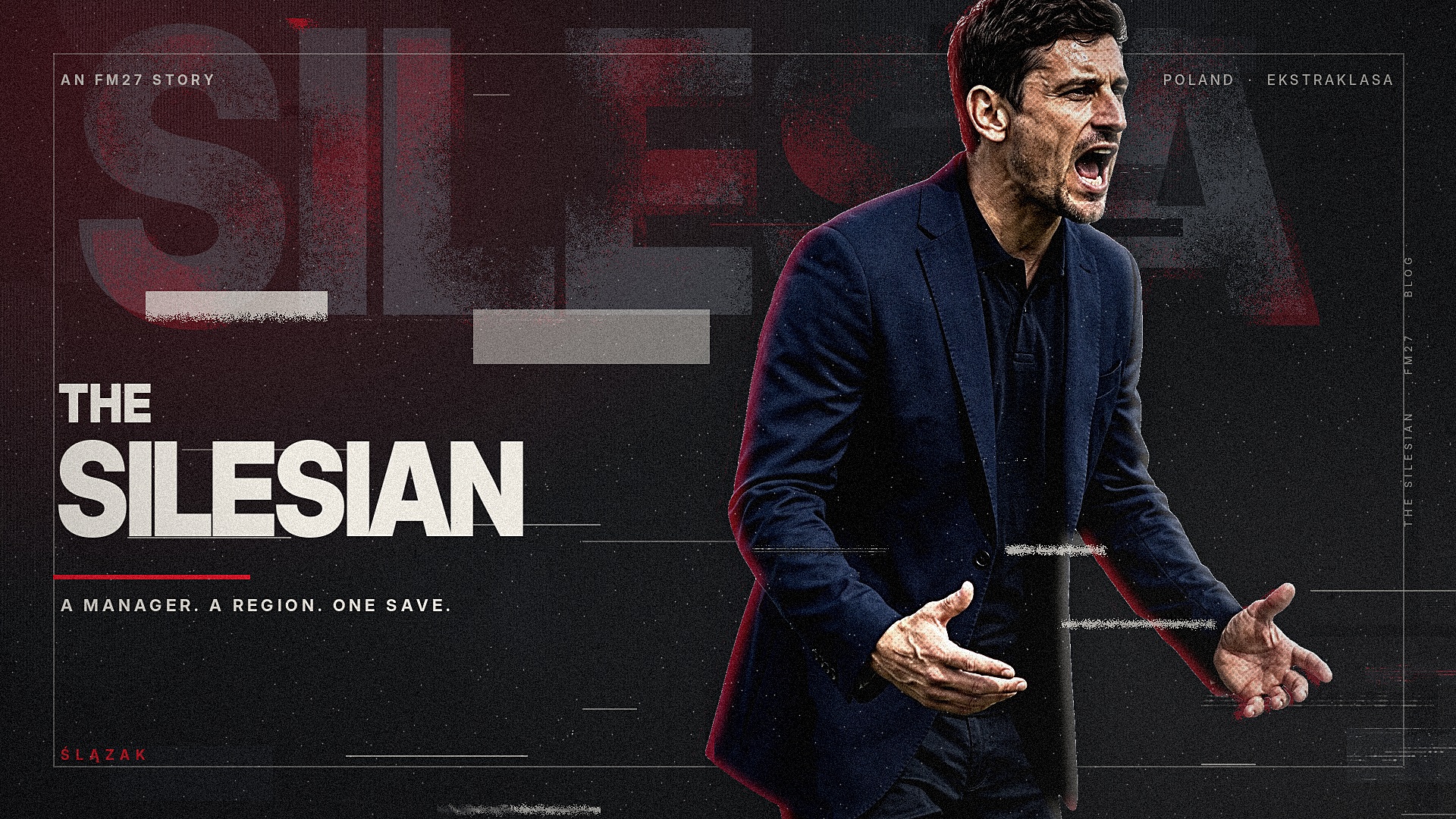
Mateusz Wrona: The Making of a Manager
From the industrial heart of Upper Silesia to the dugout at Ruch Chorzów
There are football managers who arrive at a club because the opportunity presents itself at the right moment, there are others who spend their entire careers building a reputation that eventually opens the door to a prestigious appointment, and then there are those for whom the destination feels less like a career move and more like the inevitable conclusion to a journey that began long before they ever considered becoming a manager. For Mateusz Wrona, the opportunity to lead Ruch Chorzów belongs firmly in that final category, because although his appointment represents the beginning of a new chapter in his professional life, the relationship between the man and the club stretches back through childhood memories, family traditions, the industrial communities of Upper Silesia, and a lifetime spent trying to understand what makes football such an extraordinary force in the lives of ordinary people.
At thirty-nine years of age, Wrona is not a household name in Polish football, nor does he arrive in Chorzów carrying the reputation of an established managerial heavyweight who has spent years moving between the country’s most prominent dugouts. His playing career was brief, his coaching journey has taken him through the less glamorous corners of the Polish football pyramid, and his ideas have been shaped as much by the experiences of working with limited resources as by the tactical education he has pursued away from the training ground. Yet those who have followed his development believe that the combination of local understanding, intellectual curiosity, stubborn determination and an uncompromising attitude towards collective responsibility could make him a particularly compelling appointment at a club whose identity has always been inseparable from the people and place it represents.
This is not simply the story of a young coach being handed the opportunity to manage a historic Polish institution, but the story of a boy who grew up surrounded by the consequences of hard work, who discovered football as both an escape and a source of belonging, who saw his own playing ambitions disappear before he was ready to abandon them, and who subsequently began to view the game through a different lens, gradually developing the conviction that a football team could be organised, coached and built in a manner that reflected the character of the community supporting it. Mateusz Wrona has spent much of his life preparing for a job that he could never have guaranteed himself, and as he prepares to walk into the Ruch Chorzów dressing room for the first time as head coach, his story offers an opportunity to understand not only the man who has been appointed, but the philosophy he intends to bring with him.
A childhood shaped by Upper Silesia
Mateusz Wrona was born in Chorzów on 18 February 1987, into a working-class family whose lives were rooted in the industrial communities that have shaped so much of Upper Silesia’s history, where the landscape of football grounds, railway lines, factories, coal-mining infrastructure and densely populated neighbourhoods formed the backdrop to everyday life. Growing up in the late 1980s and throughout the 1990s meant that Wrona experienced a region negotiating significant economic and social change, with the industrial traditions that had supported generations of families increasingly intersecting with the uncertainty of a changing economy, the transformation of workplaces and the challenge of finding a new identity for communities whose histories were closely tied to coal, steel and heavy industry. The consequences of that transition were not abstract political or economic discussions for families like the Wronas, because they were visible in the streets, the conversations around kitchen tables, the working lives of parents and grandparents, and the determination of people who had learned that security was rarely something that could simply be taken for granted.
Wrona’s grandfather had spent much of his working life connected to the mining industry, a background that left a lasting impression on the young boy even though he was never destined to follow the same professional path, because the stories he heard about the discipline of underground work, the importance of trusting the person beside you and the understanding that individual effort only mattered when it contributed to the safety and success of the wider group became part of the values he carried into adulthood. His father, meanwhile, was a passionate Ruch Chorzów supporter whose relationship with the club extended beyond the simple act of following results, because the team represented a connection to the neighbourhood, to family memories and to a wider Silesian community that could be recognised in the faces of strangers standing beside him on a matchday. In the Wrona household, football was never merely a television programme or a weekend hobby, but a familiar language through which family members discussed loyalty, disappointment, pride and the peculiar ability of a club to bring people together even when the rest of life offered very little certainty.
The young Mateusz grew up understanding that Upper Silesia could not be reduced to a single story, because the region’s history had been shaped by overlapping Polish, German and Czech influences, shifting political borders, distinctive local traditions and the development of a strong regional identity that often sat alongside, rather than simply beneath, national identity. Chorzów itself stood within a densely connected urban landscape in which travelling between towns could take little more than a short journey on public transport, yet each community possessed its own landmarks, industrial history, family connections and football loyalties, creating a regional culture in which the badge on a shirt could carry an emotional significance far greater than the distance between neighbouring grounds might suggest. For Wrona, learning to understand that complexity was an ordinary part of growing up, and it helped shape his belief that a football club could only be properly understood when its history, its supporters and its relationship with the surrounding area were treated as essential parts of the institution rather than background details.
His childhood was not one of privilege, and there were few obvious signs that the boy from Chorzów would eventually become responsible for managing one of the most historically significant clubs in Polish football, but there was a clear sense of direction in the way he approached the opportunities available to him. He was observant, competitive and quietly stubborn, with a tendency to watch the details of a situation long after others had moved on, and while his friends might spend the entire afternoon arguing over a spectacular goal or a controversial refereeing decision, Wrona increasingly found himself wondering why a particular team had been able to create the chance in the first place, why one midfielder had been given so much space, or why a defender had moved away from the player he was supposed to be marking. Those questions were not yet sophisticated tactical theories, nor did they make him unusual in the way that a future professional coach might sometimes be romanticised, but they represented the early development of a habit that would eventually become central to his working life, namely the desire to understand the causes of what happened on a football pitch rather than simply remembering the outcome.
The teams that made him a football supporter
It would be impossible to understand Wrona’s relationship with football without beginning with Ruch Chorzów, because the club was the natural centre of his family’s footballing world and the team that gave his childhood its strongest sporting attachment. His earliest memories of following Ruch were shaped by his father’s enthusiasm, the anticipation that built around matchdays and the sense of occasion created by joining other supporters who had travelled to the stadium with their own family histories and expectations. The blue shirts, the club crest and the familiar name of Chorzów represented something permanent in a world that was changing around him, while the conversations that followed a victory or defeat taught him that football supporters did not simply choose their emotions according to the result, because loyalty was often measured most clearly when the team was struggling and the immediate rewards of supporting it were difficult to find.
As he grew older, Wrona began to understand the scale of the club’s place in Polish football, learning about the championships, the famous teams and the generations of players who had helped establish Ruch as one of the country’s most decorated institutions. The club’s history was not presented to him as a distant museum of past achievements, but as a responsibility inherited by each new generation of supporters, with the achievements of previous sides serving as a reminder of what could be possible when talent, organisation and collective belief came together. He also learned that history could become a burden when it was used to judge every present-day team against an idealised version of the past, and that the challenge facing a club such as Ruch was not simply to celebrate what had happened decades earlier, but to find a way of making its traditions relevant to the football it played in the present.
The wider Silesian football landscape also influenced his understanding of the game, because the proximity of clubs such as Górnik Zabrze, GKS Katowice and Polonia Bytom ensured that football loyalties existed within a competitive regional culture in which local rivalries were part of the everyday sporting conversation. These clubs each carried their own histories and identities, and their presence reinforced the idea that football in Upper Silesia was not defined by one team alone, but by a collection of communities whose pride, ambition and sense of belonging were often expressed through their relationship with the local club. Wrona became familiar with the intensity that could surround these fixtures, the emotional weight placed on local bragging rights and the way a match could be discussed for days afterwards, but he also developed an appreciation for the standards that competitive neighbours could establish, because rivalry offered a constant reminder that a club’s heritage did not automatically guarantee its superiority on the pitch.
His developing football education extended beyond the immediate boundaries of the region, particularly as televised European football became an increasingly important part of his life during his teenage years, introducing him to teams whose styles of play differed significantly from the more direct and physically demanding football he had often watched closer to home. He was fascinated by the technical quality and positional organisation of the strongest sides, particularly those capable of controlling matches through the movement of the ball, the spacing of their players and their ability to make opponents defend for long periods without necessarily relying on an individual moment of brilliance. The appeal was not that he wanted Ruch to abandon its own identity in pursuit of a fashionable foreign model, but that he began to recognise how the principles underlying successful teams could be adapted to different circumstances, allowing a club with fewer resources to compete intelligently by becoming more organised, more coordinated and more difficult to play against.
That distinction would later become central to his coaching philosophy, because Wrona never believed that the answer to the challenges facing a club was to imitate the appearance of a successful team without understanding the mechanisms that made it effective. He could admire a technically gifted side while recognising that its approach might be unsuitable for a team with different players, different financial resources and a different competitive environment, and he gradually developed the conviction that a coach’s job was to identify the strengths available to him before deciding how best to organise them. The teams he watched as a child therefore gave him two complementary lessons, with Ruch teaching him the importance of belonging and continuity, while the wider football world encouraged him to remain curious about the methods through which those values could be translated into performances and results.
A player built for the difficult work
Wrona’s own footballing journey began in local youth football, where his physical determination and tactical awareness quickly became more important to his development than any expectation that he would emerge as a particularly gifted attacking player. He was never the most technically spectacular boy in his age group, and he did not possess the kind of explosive pace or natural flair that would have made him an obvious candidate for a career built around individual brilliance, but he understood the value of positioning, worked tirelessly to recover possession and appeared comfortable accepting the less glamorous responsibilities that allowed more creative teammates to influence a match. Coaches appreciated his willingness to listen, his ability to recognise danger before it developed and his readiness to perform the work required by the team, even when that meant spending an afternoon covering ground, making tackles and moving the ball on quickly rather than seeking attention for himself.
As he moved through the youth ranks and into senior football, Wrona established himself as a defensive midfielder, operating in the space between the defensive line and the more advanced players while providing protection against counterattacks and helping his team establish a reliable platform in possession. His game was based on anticipation rather than aggression for its own sake, because he preferred to position himself intelligently and intercept a pass before the opposition could turn towards goal rather than relying on a desperate challenge after an opponent had already escaped his immediate control. He was strong in the tackle, difficult to unsettle and comfortable competing for second balls, but the quality that most distinguished him was his understanding of how a midfielder’s position could influence the behaviour of everyone around him, allowing a centre-back to step forward, a full-back to advance or a more creative teammate to receive the ball in a dangerous area without leaving the team unnecessarily exposed.
In possession, he was a functional rather than flamboyant footballer, favouring a simple pass into a teammate’s feet or a firm forward ball into the space ahead of him over the kind of ambitious dribbling that might have invited unnecessary risk. He could switch play when the opportunity was clear, and he possessed enough technical quality to help his team move through midfield, but his greatest contribution often came from the decisions that happened before the ball reached him, because he worked hard to scan his surroundings, identify the next pass and position himself where he could offer a useful option when possession was recovered. He was not a traditional playmaker whose influence depended on dictating every attack, nor was he simply a destroyer whose only responsibility was to break up opposition moves, but he occupied the space between those two roles, using discipline and anticipation to give his teammates a more stable platform from which to play.
Those characteristics made him a useful player in the lower levels of Polish football, where the physical demands of senior competition could expose weaknesses in players who relied too heavily on technical ability without matching it with resilience, concentration and a willingness to work for the collective. Wrona understood that football at that level was often decided by the management of small moments, including the second ball after a long clearance, the defensive reaction after a misplaced pass, the willingness to make another recovery run in the final minutes and the ability to maintain concentration when a match became chaotic. His approach was not always pretty, and he was never under the illusion that his playing style would attract attention from the biggest clubs in the country, but he took considerable pride in being the sort of teammate whom a coach could trust when a game became difficult, because he knew his responsibilities and could be relied upon to carry them out.
There was, however, a developing curiosity within him that occasionally separated his interests from those of his teammates, because while he enjoyed the physical and competitive demands of playing, he increasingly found himself thinking about the structure of the team and the reasons behind the instructions he received. He wanted to understand why one defensive midfielder was asked to remain in front of the centre-backs while another was encouraged to drop between them, why a full-back’s position could determine whether a winger had space to attack, and why some teams appeared to create passing options naturally while others relied on individual improvisation to escape pressure. These were questions that he could not always answer during his playing career, and his understanding was still incomplete, but the process of thinking about the game in this way encouraged him to view football as a connected system rather than a collection of isolated individual performances.
His playing career was ultimately far shorter than he had imagined when he was a young boy dreaming of following the professional path, because recurring problems with his knee gradually undermined his ability to train and compete at the level required by senior football. At first, he treated the injury as another obstacle that could be overcome through determination and patience, believing that careful rehabilitation and a gradual return to full training would eventually allow him to regain the consistency he needed, but repeated setbacks slowly changed the situation from a temporary interruption into a problem that threatened to dictate the rest of his career. The frustration was compounded by the knowledge that his game had never depended on extraordinary speed or athleticism, giving him every reason to believe that he might have been able to continue playing into his thirties if his body had allowed it, yet even a player whose greatest strengths were discipline and anticipation could not compensate indefinitely for a knee that repeatedly prevented him from preparing properly.
By his mid-twenties, Wrona was forced to confront the possibility that the career he had worked towards since childhood was coming to an end, and the decision to step away from playing represented a deeply personal disappointment rather than a convenient transition into a new profession. He had not reached the heights he once hoped for, he had not become the kind of player whose name would be remembered across Polish football, and he was left to consider what remained when the routine that had structured so much of his life was suddenly no longer available to him. Yet the injury also created a period of reflection that would prove decisive, because it encouraged him to recognise that his interest in football had never been limited to the physical act of playing, and that the questions he had asked about positioning, preparation, decision-making and collective organisation could be pursued from a different position within the game.
In retrospect, Wrona’s short playing career would become one of the defining influences on his approach to management, not because he romanticised the experience of being forced out of the sport, but because it taught him that ambition and ability were not always enough to determine the direction of a career. He knew what it felt like to work towards a goal that could disappear through circumstances beyond his control, and he understood how difficult it could be to find a new purpose when the identity built around one ambition had to be reconsidered. That experience would later influence the way he worked with injured players, young professionals facing uncertainty and squad members who found themselves outside the first team, because he believed that a manager’s responsibility extended beyond selecting the strongest eleven available and included understanding the human beings whose careers could be shaped by decisions made within a football club.
The classroom, the training ground and the beginning of a new career
When Wrona accepted that his playing days were over, he did not immediately emerge as a fully formed coach with a polished tactical philosophy and a clear route towards senior management, because the transition from footballer to coach required him to develop skills that had previously been secondary to his own performance. The knowledge he had accumulated as a defensive midfielder provided a useful foundation, but understanding a game from the perspective of a player was not the same as teaching it to others, and he quickly discovered that explaining a movement clearly, designing an effective training session and helping a young footballer understand the consequences of a decision demanded a different kind of preparation from simply carrying out instructions on a pitch. His first steps into coaching were modest, involving youth football and local development environments where the resources were limited, the facilities were often basic and progress depended as much on patience and communication as on the quality of the tactical ideas being introduced.
Those early experiences helped him understand the difference between knowing what he wanted a team to do and creating the conditions in which players could actually perform those actions consistently. He learned that young footballers did not all respond to the same instructions, that an exercise which looked excellent on paper could become ineffective if its purpose was not understood, and that a coach who demanded high standards without providing clear explanations could quickly lose the trust of the people he was trying to improve. Wrona began to develop a methodical approach to his work, planning sessions around specific objectives, reviewing the decisions players made during exercises and looking for ways to connect technical development with the tactical demands they would encounter on matchday. Rather than treating youth coaching as a temporary step towards a more prestigious job, he came to see it as a fundamental part of his education, because it forced him to communicate complicated ideas in ways that players of different ages and abilities could understand.
His interest in tactical analysis grew alongside his work on the training ground, and he spent considerable time studying matches, examining the positioning of teams during different phases of play and trying to understand how the movement of one player could create opportunities for another. He was particularly interested in the relationship between a team’s defensive organisation and its ability to attack effectively, because he believed that many promising attacking movements began with the quality of a team’s structure before possession had even been recovered. A midfield player who positioned himself correctly could protect the centre-backs while also becoming the first passing option after an interception, while a full-back who understood when to advance and when to remain deeper could provide width without leaving the entire defensive line vulnerable to a single counterattack. The more he studied these interactions, the more convinced he became that tactical flexibility should not mean abandoning structure, but rather creating a framework that allowed players to adapt their positions according to the demands of the moment.
Wrona subsequently moved into analytical and assistant-coaching roles within the Polish lower leagues, where he began to experience the practical difficulties of implementing ideas in environments that did not always possess the time, staffing or technology available to more affluent clubs. He worked with coaches who valued organisation and defensive reliability above all else, learned from others who preferred a more direct approach to attacking football, and gradually developed a clearer sense of which methods suited his own understanding of the game. The experience was valuable precisely because it exposed him to the compromises that exist between tactical ambition and the reality of a squad, since the most sophisticated plan was of little value if players could not execute it under pressure or if its demands left the team vulnerable in areas where it lacked the necessary quality. Wrona became increasingly interested in the idea of building a system around a club’s strengths rather than trying to force every player into a rigid template, although he remained convinced that clear principles were essential if a team was to develop a recognisable identity.
His time working alongside more experienced coaches also taught him that a successful staff member needed to understand the broader operation of a football club, including recruitment, player development, dressing-room relationships and the communication required to keep a squad focused through difficult periods. Tactical knowledge could earn the attention of a head coach, but reliability, preparation and the ability to work constructively with others determined whether that knowledge could be translated into meaningful influence. Wrona became known as a diligent analyst who was willing to challenge assumptions when he had evidence to support his argument, while remaining aware that football was a collaborative profession in which the ability to persuade people was often more useful than the ability to win an argument. He was not interested in presenting himself as the smartest person in every room, but he did want to understand why a decision had been made and whether a better solution might exist.
As his responsibilities increased, he began to take a more active role in preparing opposition reports, designing training sessions and helping players understand the tactical details required by the team’s approach. His playing background made him particularly attentive to the midfield, where he believed the relationship between positioning, awareness and decision-making often determined whether a team could control the space between its defensive and attacking lines. He also developed a growing appreciation for the importance of transition moments, because a team could be perfectly organised when settled in possession and still be vulnerable if it did not react quickly enough after losing the ball. For Wrona, the period immediately following a turnover became one of the most revealing aspects of a team’s mentality, since it showed whether players understood their collective responsibilities or whether the tactical structure depended entirely on having possession.
Developing a footballing identity
The philosophy that would eventually become known as The Silesian Way did not emerge from a single tactical revelation, nor was it the product of one coach whose methods Wrona attempted to reproduce without modification, because his understanding of football developed gradually through years of observation, study and practical experience. He wanted his teams to be organised enough to control the game without becoming passive, aggressive enough to compete for every important space without confusing intensity with recklessness, and technically secure enough to build attacks through the pitch while retaining the ability to move forward quickly when the opportunity presented itself. His ideal team would have a recognisable structure, with players understanding their positions in relation to their teammates, but that structure would exist to support intelligent movement and purposeful attacking rather than to restrict players to fixed locations regardless of what was happening around them.
The central principle was that organisation should make a team more courageous rather than more cautious, because players who understand their responsibilities are better equipped to take calculated risks when the opportunity appears. A defender who knows that a midfielder is positioned to cover the space behind him can step forward to challenge an opponent, while a full-back who trusts the rest of the defensive structure can advance to provide width without feeling compelled to remain permanently close to the centre-backs. Similarly, a midfielder who understands the positioning of the players around him can receive the ball under pressure, turn towards the opposition goal and play forward with conviction rather than choosing the safest pass simply because the team’s shape is unclear. Wrona wanted his footballers to recognise these relationships instinctively, allowing the team to move as a connected unit while still giving individuals the freedom to make decisions that could change a match.
His preferred formation was a 4-3-3 with a dedicated defensive midfielder, although he regarded the shape as a starting point rather than a rigid arrangement that had to remain unchanged throughout every phase of play. In possession, he wanted the team to create different forms of width and central occupation depending on the movement of the full-backs and wingers, with one full-back encouraged to advance aggressively along the flank while the other could move inside to provide an additional passing option in midfield. This asymmetry was designed to give the team more than one way of progressing the ball, because the overlapping full-back could stretch the opposition’s defensive line and deliver crosses from advanced positions, while the inverted full-back could help establish numerical superiority in central areas and provide protection against counterattacks. The objective was not to make the system look tactically fashionable, but to create a structure in which the team’s players could support one another more effectively than their opponents could defend.
The defensive midfielder would play a particularly important role in this arrangement, dropping between the centre-backs when necessary to help initiate possession from deeper positions and provide the team with a stable foundation during the first phase of build-up. Wrona wanted his centre-backs to be physically strong and comfortable enough in possession to resist pressure, while also possessing the discipline to recognise when a direct pass into midfield or towards the forward line offered a better route forward than a sequence of short passes that achieved little beyond moving the ball sideways. The midfield three would combine defensive responsibility with forward movement, featuring a player capable of making late runs into the penalty area, another who could move into spaces created by the wide players and an underlying structure that ensured the team remained balanced when attacks broke down. Ahead of them, the wide forwards would provide different threats, with one stretching the pitch and attacking space behind the opposition’s defence while the other could move inside to create opportunities for an advancing full-back, and the centre-forward would be expected to link play, occupy defenders and create room for teammates to attack beyond him.
Although Wrona wanted his team to be capable of controlling possession, he was not interested in possession for its own sake, because he believed that the purpose of keeping the ball was to create better opportunities to attack and to reduce the opposition’s ability to impose its own game. His ideal side would move the ball with patience when the opposition was compact, accelerate forward when a gap appeared and react aggressively when possession was lost, attempting to prevent the opponent from turning a successful defensive action into a dangerous counterattack. The physical demands of the system would be significant, but he believed that fitness had to be supported by intelligent positioning and coordinated movement, because asking players to run constantly without giving them a clear tactical reason for doing so would eventually lead to fatigue without producing consistent advantages. The team had to work hard, but it also had to work together, with each player’s effort contributing to a collective plan rather than becoming an isolated display of determination.
This balance between structure, intensity and collective responsibility reflected Wrona’s own experiences as a player and coach, but it also connected naturally with the values he had absorbed growing up in Upper Silesia. He did not believe that the region’s history dictated a single way of playing football, nor did he intend to reduce a complex culture to a simplistic idea of toughness, but he wanted his team to embody the qualities he associated with the best of the community around him: discipline without arrogance, resilience without self-pity, ambition without entitlement and a willingness to continue working when circumstances became difficult. The football had to be modern, purposeful and adaptable, yet the attitude behind it needed to remain recognisable to supporters who expected their team to compete honestly, represent the badge with pride and understand that the responsibility of wearing the shirt extended beyond the ninety minutes played on the pitch.
The first opportunity in senior management
By the beginning of 2024, Wrona had accumulated enough experience across youth development, analysis and assistant coaching to believe that he was ready to take responsibility for a senior team of his own, although he understood that stepping into management would expose him to pressures that were different from those he had encountered while working as part of a coaching staff. An assistant could contribute to the team’s preparation, recommend tactical adjustments and help individual players improve, but the head coach ultimately had to make the decisions that determined selection, substitutions, training priorities and the direction of the club, accepting responsibility when the plan failed as well as taking credit when the team performed well. Wrona had spent years preparing for that responsibility, yet he knew that no amount of tactical study could fully reproduce the experience of facing a dressing room after a damaging defeat or explaining to a disappointed player why he had been left out of the starting eleven.
His first senior managerial appointment came at a smaller Polish club in 2024, where limited resources and modest expectations provided a demanding but useful environment in which to test his ideas. The club did not possess the financial strength to build a squad around a collection of ideal tactical profiles, and Wrona quickly discovered that the practical challenge was to identify which elements of his philosophy could be introduced immediately and which would require more time, recruitment and repetition on the training ground. He wanted to establish a more coherent structure in possession, improve the team’s reactions after losing the ball and encourage players to take greater responsibility for their decisions, but he also recognised that attempting to change every aspect of the team’s play at once could create confusion and undermine the confidence of players who were already struggling to adapt to a new manager.
His approach was therefore gradual, beginning with defensive organisation, clearer responsibilities in midfield and a greater emphasis on the distances between the lines, before moving towards more ambitious patterns of build-up and attacking rotation as the players became comfortable with their roles. Training sessions were designed to connect the principles he wanted to establish with realistic match situations, encouraging players to recognise the moments when they could press aggressively, when they needed to recover into shape and when a forward pass could expose the opposition’s defensive structure. Wrona was demanding, but he attempted to explain the reasons behind his decisions rather than relying on authority alone, believing that players were more likely to perform a tactical instruction consistently when they understood the problem it was intended to solve.
The experience was not without setbacks, because the limitations of the squad sometimes prevented the team from executing the football he wanted to play, while the inconsistency that often characterises lower-league competition made it difficult to establish a stable level of performance across an entire season. There were matches in which the team controlled possession without creating enough clear chances, games in which an aggressive press left too much space behind the midfield and difficult periods when a succession of poor results threatened to weaken the confidence he had worked to build. Wrona had to learn that a manager could prepare a team carefully and still lose because of a defensive mistake, a missed opportunity or an opponent whose individual quality proved decisive, and he gradually became more comfortable with the distinction between a result that exposed a genuine tactical problem and one that required patience rather than an immediate change of direction.
Those lessons helped him develop a more realistic understanding of management, because the ability to recognise a weakness was only useful if he could also identify a practical solution that the available players were capable of implementing. He became more selective about the changes he introduced, more attentive to the emotional state of the dressing room and more aware that the timing of a tactical adjustment could be as important as the quality of the idea itself. He also learned to value the small improvements that were not always visible in the league table, including better communication between defenders, more disciplined positioning during transitions and the willingness of players to continue following a collective plan after an early setback. His first senior appointment did not transform him into a finished product, but it gave him something that years of studying matches could never provide on their own, namely the experience of being responsible for a football team whose performances were shaped by his decisions.
A coach formed by setbacks, not reputation
Wrona’s reputation developed slowly, and his progress through the Polish game was not built around a single dramatic achievement that immediately attracted the attention of the country’s biggest clubs, but through the accumulation of experience and the gradual recognition that he possessed a clear understanding of the work required to build a team. He remained committed to studying the game, reviewing his own decisions and learning from coaches whose approaches differed from his own, while attempting to preserve the principles he believed were most important to his identity. He did not see tactical development as a process that ended once a manager had settled on a preferred formation, because the game continued to evolve and every new squad presented different strengths, weaknesses and opportunities that required a coach to reassess how his ideas could best be applied.
His experience as a former defensive midfielder continued to influence the way he evaluated players, particularly when assessing the balance of a team and the importance of having footballers who could perform several complementary roles within the same system. He valued players who understood space, recognised danger early and remained disciplined when they were not directly involved in the action, because he believed that the most important contribution a player could make was not always the one that appeared in a match report. At the same time, he wanted his teams to possess enough attacking courage to turn defensive stability into meaningful forward progress, and he was particularly interested in recruiting players who combined physical reliability with the technical ability to make good decisions under pressure. For Wrona, the ideal footballer was not simply the one with the strongest individual statistics, but the one whose qualities helped the entire team function more effectively.
He also became increasingly aware that the modern manager needed to communicate a coherent vision to people with different priorities, including players who wanted to improve their careers, supporters who expected the club to represent its history, executives who needed to protect the organisation’s finances and staff members whose work often went unnoticed outside the training ground. A tactical philosophy could provide a useful foundation, but it could not compensate for poor relationships or a failure to explain why difficult decisions had been made, and Wrona wanted to develop a management style that combined high expectations with a clear sense of responsibility towards the people working around him. He believed that standards mattered precisely because the club represented something larger than the manager, and he was determined to build an environment in which every player understood that talent created opportunities but commitment, discipline and collective effort determined whether those opportunities could be sustained.
The values he returned to most frequently were expressed in three words: Praca. Odwaga. Wspólnota. Work, courage and community. The first reflected his belief that progress had to be earned through preparation and consistent effort rather than assumed on the basis of reputation, the second represented the willingness to take responsibility and play with conviction even when the risk of failure was real, while the third acknowledged that a football club could not be separated from the people whose loyalty gave it meaning. These principles were not intended as slogans that could be displayed on a wall while the team behaved differently on the pitch, but as standards against which players and staff could assess their own decisions, from the intensity of a training session to the reaction after a difficult defeat. Wrona wanted his teams to be brave enough to play forward, disciplined enough to protect one another and humble enough to understand that individual success was inseparable from the work of the group.
The combination of his local roots, his practical experience and his growing tactical conviction eventually made him an increasingly interesting candidate for a more ambitious project, particularly one that required a manager to build a clear identity rather than simply maintain the existing direction of a well-established squad. He had not managed at the highest level of Polish football, and there were legitimate questions about whether his ideas could survive the pressure of a club with a large supporter base and a history that demanded more than respectable performances, but his relative lack of experience also meant that he arrived without a long record of habits that had become difficult to change. Wrona remained a coach who needed to prove himself, and he understood that his reputation would be determined by what his team did on the pitch rather than the strength of the story surrounding his appointment, but the opportunity to work at a club whose identity he understood offered the possibility of bringing together the different strands of his life in a way few managerial positions could have achieved.
Ruch Chorzów: the club that was always there
For a manager who had spent his life in Chorzów, the prospect of taking charge of Ruch carried a significance that could never be measured entirely through salary, status or the level of competition in which the club played. Ruch was the team his father had supported, the club whose history had shaped his understanding of football and the institution through which he had first discovered the connection between sport and community, and the opportunity to lead it represented a responsibility that was both deeply personal and professionally demanding. He understood that being a supporter did not automatically make someone the right person to manage a club, because affection for a badge could become a weakness if it prevented a coach from making difficult decisions, but he believed that his familiarity with the region gave him an appreciation of the expectations surrounding Ruch and the importance of treating its history with respect while remaining focused on the demands of modern football.
The challenge would be to create a team that supporters could recognise without attempting to recreate a past that belonged to a different era, because the conditions of contemporary football required clubs to be organised, adaptable and intelligent in their use of resources. Ruch’s history offered a source of pride, but it could not be used as a substitute for recruitment, player development, tactical preparation or the day-to-day discipline required to compete consistently, and Wrona knew that the club’s ambitions would only become realistic if the organisation could translate its emotional connection with the community into practical advantages on the pitch. He wanted the supporters to see a side that competed for every important space, pressed with purpose, moved the ball forward with conviction and remained connected when the opposition forced it to defend for long periods, because he believed that commitment and tactical clarity could create a recognisable identity even before the club possessed the resources to assemble a squad capable of dominating its opponents.
His first priority would be to establish an environment in which the players understood the demands of representing Ruch, while ensuring that the standards expected of them were supported by a clear plan for improving their performances. He would need to assess the squad honestly, identify which players possessed the attributes required by his preferred 4-3-3 and determine where recruitment would be necessary to create the balance he wanted, all while recognising that the club could not simply replace every footballer whose characteristics differed from his ideal profile. The defensive midfielder would be central to the structure, the centre-backs would need to combine physical presence with sufficient composure to initiate attacks, and the full-backs would have to offer complementary qualities so that the team could create width on one side while maintaining control in the centre. Further forward, he wanted movement, intelligence and a willingness to attack space, with the centre-forward capable of linking play rather than remaining disconnected from the midfield, but he understood that these principles would need to be introduced through training and recruitment rather than expected to appear overnight.
There would also be a cultural responsibility attached to the job, because Wrona wanted Ruch to feel connected to the community that had shaped him and to ensure that the club’s identity was reflected in its conduct as well as its football. He believed that local players and young prospects deserved meaningful consideration when they possessed the quality and attitude required to contribute, although he had no intention of limiting recruitment to one geographical area if a player from elsewhere offered the qualities needed to improve the team. His view was that the strongest clubs combined a clear understanding of their own identity with an open mind towards talent, allowing their recruitment to reflect both their roots and the realities of the market. For Ruch, that would mean building a team that understood what the badge represented while remaining willing to learn from football beyond Silesia, because loyalty to a community did not require a club to become closed to new ideas.
Wrona was also conscious that the emotional significance of the appointment could quickly become a burden if it encouraged unrealistic expectations, and he did not intend to promise immediate success simply because he understood the club’s history. He knew that supporters had heard ambitious statements before, that a famous name did not guarantee good football and that a manager’s first responsibility was to establish a team capable of competing consistently before discussing the achievements that might eventually follow. His ambition was considerable, but he wanted it to be grounded in the daily work of building a squad, improving players and creating a style of play that could withstand the difficult moments of a long season. The objective was not to persuade people that Ruch would succeed because of its past, but to give them reasons to believe in its future by demonstrating that the team had a clear purpose, a recognisable identity and the determination to improve.
The Silesian Way begins
There is an understandable temptation to view a manager’s appointment through the familiar language of tactics, transfers and immediate expectations, particularly in the world of Football Manager, where a new save often begins with a formation on a tactics screen and a squad list waiting to be assessed. Yet Mateusz Wrona’s story suggests that the more interesting starting point lies somewhere deeper, because the football he wants to build is connected to the experiences that shaped his understanding of the game long before he had the authority to select a team. The boy who watched Ruch with his father, the young midfielder who learned the importance of covering space and protecting teammates, the injured footballer who had to reconsider his future and the developing coach who spent years studying the relationship between structure and movement have all contributed to the manager who now stands at the beginning of his most important challenge.
His philosophy is not a claim that Silesian identity can be reduced to a particular formation or that every player representing Ruch must possess the same personality, but an attempt to connect a modern footballing approach with values he believes the club and its community can recognise. He wants a team that is difficult to break down because its players understand one another, aggressive because they know when to press and when to recover, ambitious because it looks for opportunities to move forward, and resilient because it does not abandon its principles when the first plan fails. He wants the midfield to provide the intelligence and energy that allow the team to control matches, the defence to offer security without becoming passive, and the attacking players to combine individual freedom with a clear understanding of their responsibilities towards the wider structure. Above all, he wants the team to work as a collective, because he believes that organisation and shared purpose can help a club compete against opponents whose individual resources might otherwise give them an advantage.
The road ahead will test every part of that belief, because the appointment of a relatively inexperienced manager at a club of Ruch’s stature inevitably carries uncertainty, and the emotional connection that makes the opportunity so compelling will also increase the pressure when results fail to match expectations. Wrona will have to prove that his ideas can be translated into performances, that his communication can maintain the trust of a dressing room through difficult periods, and that his understanding of the club’s identity can coexist with the ruthless decisions required to build a competitive team. He will make mistakes, encounter players whose strengths do not fit his preferred system and discover that even the clearest tactical plan can be undone by the unpredictable details of a football match, but he believes that the answer to those challenges lies in preparation, honest assessment and the willingness to keep improving rather than abandoning a coherent direction at the first sign of difficulty.
For the supporters, the attraction of Wrona’s appointment lies not in the promise that a local connection will automatically lead to success, but in the possibility that a manager who understands the club’s history can use that understanding to build something relevant to the present. He knows what Ruch means to the people who follow it, but he also knows that affection alone cannot win matches, and his task will be to turn that connection into a footballing identity that players can express through their decisions, their movement and their willingness to compete for one another. The challenge is to make the team recognisably Ruch without trapping it in nostalgia, to respect the traditions that have shaped the club without allowing those traditions to limit its ambitions, and to create a modern side whose performances give the supporters something new to believe in while remaining faithful to the values that first made them fall in love with the badge.
The announcement: a son of Chorzów takes charge
On the eve of the 2026–27 season, Ruch Chorzów have confirmed the appointment of Mateusz Wrona as the club’s new manager, placing a man whose life has been shaped by the streets, communities and footballing traditions of Upper Silesia at the head of one of the region’s most recognisable institutions. At thirty-nine, Wrona arrives with a short playing career behind him, several years of coaching and analytical experience, and the conviction that Ruch can build a successful future by combining a modern tactical identity with the discipline, courage and collective responsibility that he believes should define the club’s football. His appointment is a significant step in a career that began far from the spotlight of senior management, but it is also a deeply personal moment for a coach whose connection to the club reaches back to the earliest days of his life.

Speaking at his unveiling, Wrona made clear that he understood both the privilege and the pressure attached to the role, acknowledging that the opportunity to manage Ruch was not something he regarded as an ordinary career move, but a responsibility to the supporters, the players and the community that had helped shape him. He was careful not to promise instant success or to suggest that his local roots would exempt him from the scrutiny faced by any manager, instead emphasising that the team would have to earn the right to represent the club through its performances, its attitude and its willingness to improve. The football he intends to build will be ambitious and aggressive, but it will also be organised and purposeful, with the team expected to work for one another, take responsibility in possession and demonstrate the resilience required to compete when circumstances become difficult.
For Wrona, the words that best describe the challenge are the same principles that have guided his journey from the industrial communities of Chorzów to the managerial dugout: Praca. Odwaga. Wspólnota. Work, courage and community. They are values that connect his family history with his playing career, his coaching education with his tactical philosophy, and his personal attachment to Ruch with the demands of the job he has now accepted. Whether those principles will be enough to deliver the success that the club and its supporters crave remains to be seen, because football has never rewarded sentiment alone, but Wrona is convinced that a team built around shared responsibility, intelligent organisation and collective ambition can create the foundations for something lasting.
The first chapter of The Silesian therefore begins not with a transfer announcement, a tactical diagram or a prediction about where Ruch Chorzów will finish in the league, but with the introduction of the man who will be responsible for bringing the project to life. Mateusz Wrona is a son of Chorzów, a former defensive midfielder whose playing ambitions were cut short, a coach formed in the less glamorous reaches of Polish football and a manager who believes that modern ideas can thrive when they are connected to a clear sense of identity. He now has the opportunity to turn those beliefs into reality at the club that first taught him what football could mean, and as the 2026–27 season approaches, the challenge is no longer to imagine the team he wants to build, but to prove that he can make it happen.
Mateusz Wrona is the new manager of Ruch Chorzów. The Silesian has come home, and his work begins now.
Leave a Reply