
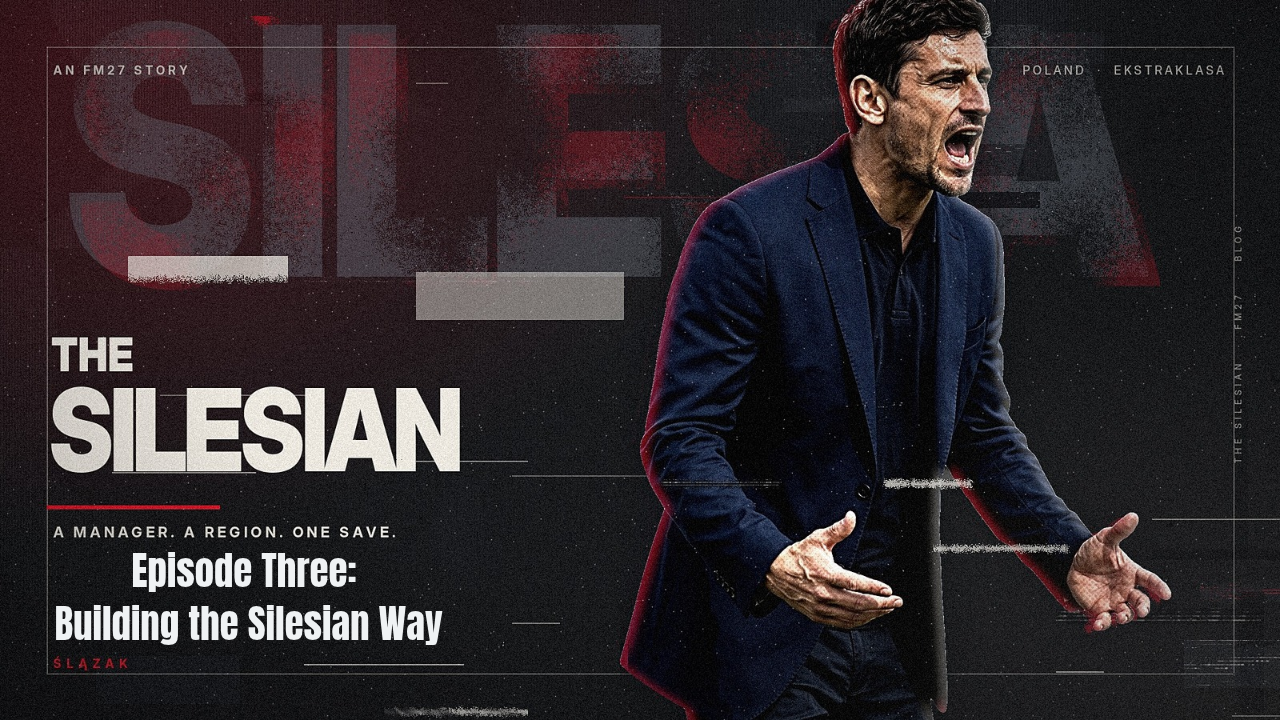
Mateusz Wrona’s vision for the future of Ruch Chorzów
Every new managerial appointment brings the promise of a fresh start, but for Mateusz Wrona, taking charge of Ruch Chorzów is about something far greater than simply changing the formation or bringing in a handful of new players. His ambition is to build a football club with a recognisable identity, one that reflects the character of its surroundings while establishing a modern style of football capable of taking Ruch forward over the coming seasons. However, Wrona is under no illusions about the challenge ahead, because the squad he has inherited was not assembled with his tactical philosophy in mind, and expecting an immediate transformation would be unrealistic. This is a project that will require patience, careful recruitment and a commitment to developing young players, with the ultimate objective being to create a team that supporters can identify with and opponents will recognise for its distinctive approach.
Having grown up in Chorzów, Wrona understands the importance of Ruch to the local community and the wider Upper Silesian region, where football clubs are often much more than sporting institutions. He wants his team to reflect the values that have shaped the area, with hard work, resilience, collective responsibility and a willingness to fight for one another forming the foundations of everything they do. However, he also recognises that those characteristics must be supported by intelligent football, technical quality and a clear tactical structure, because working hard alone will not be enough to compete with the strongest teams in Polish football. His ambition is to create a side that combines the traditional qualities associated with Ruch with a modern approach to possession, pressing and attacking transitions, establishing what he calls The Silesian Way.
A tactical identity built around the 4-3-3
At the centre of Wrona’s long-term vision is a 4-3-3 formation, although he is keen to emphasise that the formation itself is only a starting point rather than the identity he wants to establish. He wants Ruch to become a team that can control possession when opportunities arise, but one that also understands when to play forward quickly and exploit spaces before the opposition can reorganise. The objective is to create a balanced side that defends with physical authority, progresses the ball intelligently and attacks with purpose, using coordinated movement rather than relying entirely on individual moments of quality.
The defensive structure will be built around two physically imposing centre-backs who are comfortable defending their penalty area but also possess the technical ability to progress possession. In front of them, a defensive midfielder will provide the foundation of the system, dropping between the centre-backs during build-up to create a back three and offering an additional passing option when the opposition attempts to press. This player will need to combine defensive awareness with the composure and passing ability required to dictate the direction of attacks, because Wrona wants Ruch to build through the middle rather than constantly bypassing their midfield.
The full-backs will have contrasting responsibilities, with one encouraged to attack aggressively down the flank, overlap the winger and provide width through advanced crossing positions, while the opposite full-back will move inside to support the midfield and help create numerical advantages centrally. Ahead of the defensive midfielder, two more advanced central players will provide energy, creativity and attacking movement, with one expected to make regular forward runs into the penalty area while the other helps connect the midfield with the wide attackers. Wrona wants his wingers to offer different threats, with one maintaining width and stretching the opposition defence while the other moves inside to create opportunities for overlapping runs and attack the spaces between defenders.
At centre-forward, the ideal profile is a strong and intelligent striker capable of linking play, bringing teammates into the game and creating opportunities for the wide attackers to run beyond him. The manager wants a focal point who can hold up possession under pressure while still possessing the movement and finishing ability required to become a genuine threat inside the penalty area. When everything comes together, Wrona hopes to have a team that can build patiently, create overloads in wide and central areas, press aggressively when the opportunity appears and transition quickly into attack when possession is regained.

The reality of the current squad
Despite having a clear idea of how he wants Ruch to play, Wrona knows that the current squad is unlikely to be capable of implementing the complete system immediately. With only twenty senior players available, many of whom are experienced professionals in their late twenties and thirties, there are limitations to how much can be changed in a short period. Players such as Martin Konczkowski, Aleksander Komor, Szymon Szymański, Andrej Lukić, Denis Ventura, Michał Chrapek and Daniel Szczepan have accumulated considerable experience across Polish and European football, but they have also spent their careers working under different managers and adapting to different tactical approaches.
Wrona does not view that experience as a weakness, because having players who understand the demands of senior football will be important during the early stages of the project. Instead, he wants to use the first season to establish defensive organisation, improve the team’s understanding of possession and introduce the pressing principles that will eventually become central to his football. He recognises that certain players may need time to adapt to unfamiliar responsibilities, particularly the full-backs and midfielders, whose positioning will be essential to creating the structure he wants. Rather than forcing the team into a complicated system before they are ready, he intends to introduce his ideas gradually, allowing the players to develop their understanding through training and competitive matches.
The first priority will be to make Ruch difficult to play against, with a compact defensive structure, better coordination when pressing and greater discipline when the team loses possession. In attack, the focus will be on creating better passing options, improving movement between the lines and encouraging the players to recognise opportunities to progress the ball forward. Wrona understands that there will be mistakes along the way, but he believes that improvement must be visible even when results do not always go according to plan. The first season will therefore be about laying the foundations, with the expectation that the football will become more recognisable as the players gain confidence in their responsibilities.
Recruitment: building a squad for the future
One of the biggest challenges facing Wrona and Director of Football Tomasz Foszmanczyk will be transforming the recruitment strategy to ensure that future signings fit the footballing identity being developed. Ruch cannot afford to compete financially with the biggest clubs in Poland, meaning that intelligent scouting and identifying players before they become established names will be essential. Wrona wants recruitment decisions to begin with the tactical requirements of each position, rather than simply looking for the most highly rated or experienced player available.
The club will continue to look towards the Polish lower divisions for talented players capable of making the step up, while neighbouring markets such as Czechia and Slovakia will provide additional opportunities. The Balkans and other European markets will also remain important, particularly when the recruitment team identifies players whose physical and technical qualities suit the demands of the system. Wrona is particularly interested in players aged between twenty-one and twenty-five who already possess senior experience but still have considerable room for development, allowing Ruch to improve the first team while building a squad with greater long-term value.

The manager does not intend to introduce an arbitrary age limit or immediately replace every experienced player, because there will always be a place for professionals who demonstrate the right attitude and continue to perform. However, he wants the overall age profile of the squad to improve gradually, creating a balance between experienced leaders, players entering their prime and younger footballers who can develop into important first-team members. Versatility will also be valuable, particularly given the relatively small squad, although every signing must still possess a clear primary role within the system.
Developing the next generation
Youth development will be just as important as recruitment, particularly with the requirement for at least one Polish under-21 player to be included in the starting eleven. Wrona does not want this regulation to become a selection problem, because he believes the club should be developing enough young Polish talent to make those decisions naturally rather than being forced into them. The objective is to create a pathway in which young players are given the coaching, experience and opportunities required to become genuine first-team options.
Three players have already caught the manager’s attention, with defensive midfielder Nikodem Leśniak-Paduch, wide attacker Krystian Rostek and young striker Kacper Dyduch all representing potential opportunities for the future. Leśniak-Paduch is particularly interesting given the importance of the defensive midfield position within Wrona’s system, and developing his ability to protect the defence while progressing possession could provide the club with an important long-term option. Rostek offers the opportunity to develop a young wide attacker who understands the demands of the system, while Dyduch represents an exciting pathway from the club’s own youth setup into the senior side.
Wrona wants these players to benefit from training alongside experienced professionals, learning the demands of senior football while developing the technical, tactical and physical qualities required to compete at this level. However, he is not interested in rushing youngsters into the first team simply because of their age or potential, because their development must be carefully managed. The aim is to create an environment in which young players can earn opportunities through their performances, with the coaching staff providing clear development plans and the senior squad helping establish the standards expected at Ruch.
Developing local and Polish talent will also strengthen the connection between the club and its supporters, because Wrona believes there is something particularly meaningful about seeing players progress through the system and eventually represent the first team. He wants Ruch to become an attractive destination for ambitious young Polish footballers who believe they can develop their careers at the club, with a reputation for providing genuine opportunities becoming an important advantage in future recruitment.
A three-year project
Wrona understands that the transformation will not happen overnight, and he views the first three seasons as an opportunity to gradually reshape the squad and establish a sustainable footballing model. The opening campaign will focus on improving organisation, introducing the tactical principles and identifying the areas of the squad that require investment, while making the most of the experience already available. The second season should see a greater number of players recruited specifically for the system, alongside further opportunities for younger members of the squad, allowing the team’s style of football to become more consistent and recognisable.
By the third season, the ambition is to have a squad that has been assembled with the Silesian Way firmly in mind, with players capable of performing the required roles and enough depth to maintain the same approach throughout a demanding campaign. Recruitment should become more proactive, with potential replacements identified before important players depart, while the academy should be providing a regular supply of young footballers capable of challenging for senior positions. The intention is to move away from repeatedly rebuilding the squad and instead create a structure that allows Ruch to develop continuously, regardless of individual changes in personnel.
Of course, football rarely follows a perfect plan, and Wrona knows that injuries, finances, player departures and unexpected opportunities will sometimes force the club to change its priorities. However, he believes that having a clear direction will allow Ruch to make better decisions and avoid returning to the short-term recruitment approach that can leave clubs constantly searching for solutions. Every signing, every academy promotion and every tactical adjustment should contribute towards the same objective, ensuring that the club moves closer to the identity it wants to establish.
The Silesian Way
Ultimately, Wrona wants Ruch Chorzów to become a team that supporters can recognise immediately, not because every player comes from the same background or because the team follows an identical pattern in every match, but because its football is built around a consistent set of principles. He wants a side that defends with physical authority, presses with intelligence, uses possession with purpose and attacks with the courage to take risks, while maintaining the collective discipline required to recover when those risks do not succeed.
The three words that define his philosophy, Praca. Odwaga. Wspólnota., meaning Work. Courage. Community., must become more than a slogan associated with his appointment, because they represent the standards he expects from every player who wears the Ruch shirt. Work means preparation, commitment and responsibility, courage means playing with conviction and refusing to be intimidated by the opposition, while community represents the understanding that every individual is part of something much bigger than themselves.
The current squad may not yet possess all the qualities required to deliver the football Wrona ultimately wants, but that does not change the ambition. He has inherited a group of experienced professionals who can provide the foundations, a small number of promising young players who could become important members of the first team and a club with the history and support to make the project meaningful. The challenge now is to combine those elements through intelligent recruitment, consistent coaching and a long-term commitment to development.
The Silesian Way will not be created in one transfer window or one successful run of results, because it must be built through the decisions made every day at the training ground, in the recruitment department and throughout the club. Wrona is prepared to be patient, but he is not prepared to stand still, because every season must leave Ruch closer to becoming the team he has imagined.
One club. One identity. One mission. The Silesian Way starts with the players we have, but it will be defined by the team we build.
Leave a Reply