
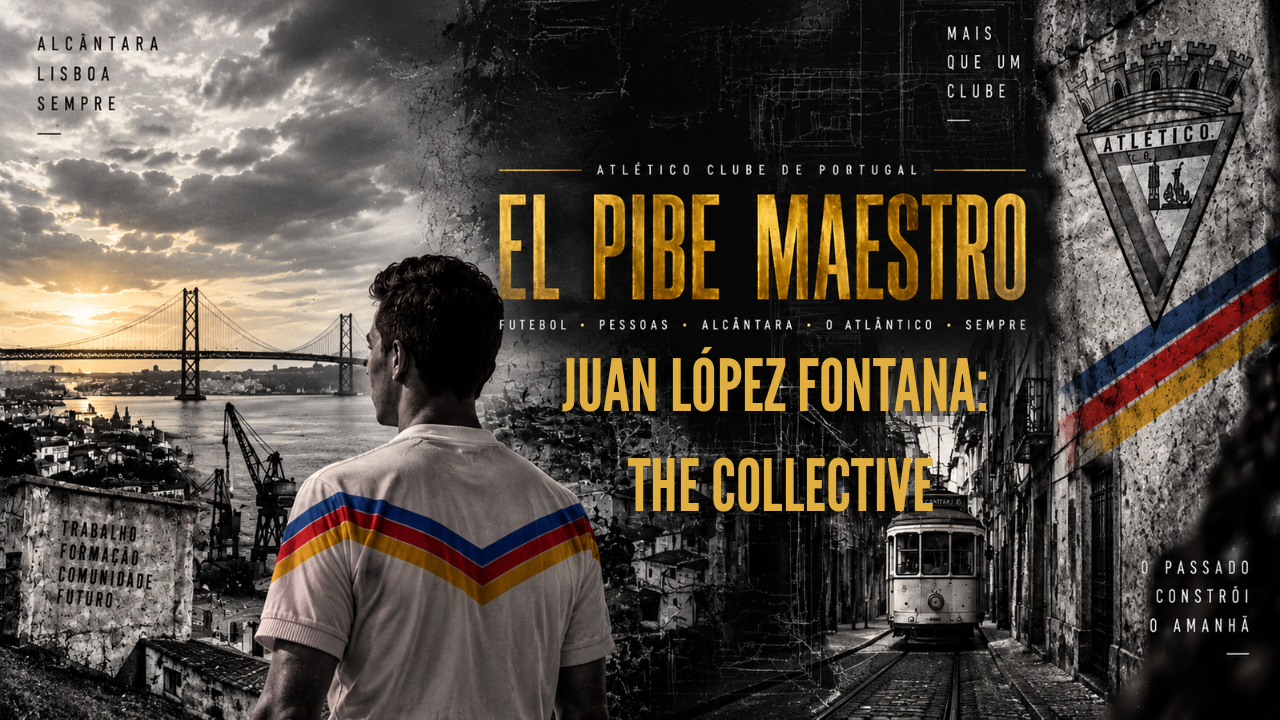

Born in Montevideo in 1908, Juan López Fontana was a physical education teacher before he became one of the most significant coaches in Uruguayan football history. His background is an interesting starting point for understanding his approach to the game; he was an educator by profession, a man of religious faith, and someone whose philosophy appeared to place considerable importance on collective responsibility. He also worked in domestic football, including at Central Español, before taking charge of the national team in 1949. His career would eventually encompass two World Cups with Uruguay, domestic success with Peñarol and a later spell coaching Ecuador.
There is a quotation attributed to López which, for me, captures the essence of his footballing philosophy: “El mejor de todos nosotros, somos todos nosotros juntos” – the best of all of us is all of us together. It is a simple statement, but one with considerable weight. Individual quality matters, certainly, yet its value is ultimately measured by what it contributes to the collective. That idea sits comfortably alongside the identity Santi Bentancur is trying to establish at Atlético CP; the coach as teacher, the team as a collective project, and individual expression emerging from a shared understanding of the game.
López’s defining achievement was, of course, the 1950 World Cup. However, I am less interested in treating the Maracanazo as an isolated miracle and more interested in understanding the planning, relationships and tactical decisions that made it possible. There is a lot more to learn from the coach than simply the result.

The story of the 1950 final is often told through the scale of Brazil’s disappointment, but the more interesting perspective is what Uruguay did to make the result possible. López’s side was not simply a collection of determined individuals hoping to withstand the occasion; there was a clear understanding of how its best players could influence the game, and how the supporting structure could help them do so.
At the heart of the team was Obdulio Varela, the captain and midfield reference point. His importance extended beyond his individual contribution; he provided authority and organisation, helping Uruguay maintain its composure in a match where the atmosphere and expectation could easily have overwhelmed them. Alongside him, Juan Alberto Schiaffino was the central creative influence. López wanted the ball to pass through him, recognising that his technical ability and intelligence could connect the different parts of the attack.
The wide players were equally important. Alcides Ghiggia offered penetration and a direct attacking threat, while Rubén Morán was selected on the opposite flank despite his youth and limited international experience. Ernesto Vidal’s injury created a difficult selection decision, but López chose a player whose positional function suited the requirements of the team. It was an indication that he was prepared to make decisions based on what the collective needed, rather than simply defaulting to experience.
The instructions for the final are particularly revealing. López was concerned about Brazil’s crossing threat and gave Schubert Gambetta specific responsibilities to provide additional protection in the penalty area. Víctor Rodríguez Andrade was tasked with closely following Friaça. At the other end, López listened when Ghiggia explained that he was receiving the ball too far ahead of him, forcing him into repeated physical battles. Julio Pérez was subsequently instructed to carry the ball forward and find him with shorter passes.
Óscar Míguez, meanwhile, was expected to support the inside forwards rather than remain isolated as a conventional centre-forward. The attacking structure was designed to stretch Brazil when Uruguay had possession, before narrowing when defending.
What stands out is the detail. López understood the strengths of his players, identified the problems presented by the opposition and adjusted the relationships between individuals accordingly. Uruguay’s achievement was not simply an expression of Garra; it was also an exercise in planning, discipline and intelligent adaptation.

There is little point pretending that López’s Uruguay and the Atlético CP side I am building are directly comparable in structural terms. Almost eighty years separate them; the formations, physical demands and tactical environment have changed beyond recognition. I am not trying to recreate the football of 1950, nor do I think that would be particularly useful. What interests me is something more fundamental: how López organised his team to get the best out of its strongest players, and how those principles might inform the way I want Atlético to play.
The most obvious connection is Schiaffino’s position within the team. López recognised that he needed to be more than another attacking midfielder; he was the player through whom Uruguay could connect its different phases of possession. I see a comparable responsibility for Miguel Menino. I want him to become a central reference point in our build-up, receiving between the lines and deciding where the attack goes next. Whether it is Menino, Humberto Lourenço or Roderick Manata occupying either of the two advanced midfield positions, the expectation is that they offer a connection between the deeper players and the forwards. Silva provides the central reference point, but the attacking midfielders should be able to combine around him, release the wing-backs or find one another in the spaces between the opposition’s lines. The aim isn’t to make one player responsible for creating everything; it is to establish relationships that allow several players to influence the attack.
The wide players offer another interesting comparison. López understood that Ghiggia’s effectiveness depended partly on the quality and timing of the service he received, and adjusted Julio Pérez’s responsibilities to give him better opportunities. I am trying to establish a similar relationship through our build-up from either wide centre-back: Matos and Loureiro should be able to find one of the tens between the lines. From there, the ten can connect with the advanced wing-back, who is often one of our furthest players forward. It might be Conceição on the right or Parente on the left, depending on the personnel and the side from which we progress. The important detail is the timing: I don’t want the wing-back advancing simply because his role tells him to. His movement should be connected to what happens centrally, arriving into space when the pass can find him rather than forcing him to receive with an opponent already set.
I also want more from Silva than simply occupying the centre-backs and waiting for service. López expected Míguez to contribute to the attacking combinations, and I want our centre-forward to offer a similar connection. Silva should give the tens someone to play off, create space through his movement and remain involved when possession moves away from him. With the wing-backs providing the width, there should be opportunities for the three central attackers to combine without becoming crowded into the same spaces.
Defensively, the comparison is much less direct. López’s Uruguay worked within the principles of the WM, whereas we build with three centre-backs and a double pivot before settling into a 5-2-3 without the ball. I wouldn’t claim that the two systems share the same defensive method. What I do take from López is the attention given to individual responsibilities within the collective: understanding where the danger is coming from, knowing when to provide cover and making sure that one player’s freedom does not leave another exposed.
Leave a Reply